 PickVids
Best Scientific method & science communication Videos
The 127 Scientific method & science communication videos here were recommended by different people across different months. Choose by who it is for: 2 introductory, 12 intermediate, 113 for a general viewer, and 0 for someone who wants the harder derivation. Most of them are an explainer. What they share is that one picture or analogy is used to supply a missing concept. Channels you will keep seeing include Veritasium, Angela Collier , Christopher Sykes.

The man who almost faked his way to a Nobel Prize
BobbyBroccoli's first of three parts on Jan Hendrik Schon, the Bell Labs postdoc whose fabricated organic semiconductor results nearly won a Nobel Prize.
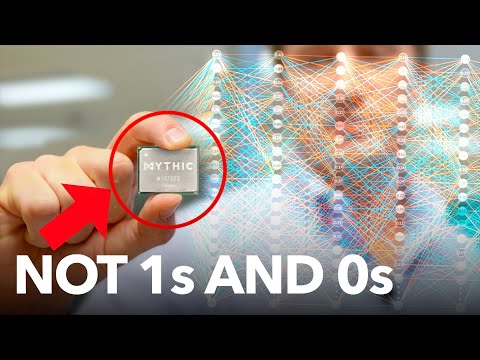
Future Computers Will Be Radically Different (Analog Computing)
Veritasium explains why analog computing may suit AI workloads, covering old analog computers, The Analog Thing and Mythic's analog chips that use flash memory for neural network inference.

Penn and Teller on Vaccinations
A short clip of Penn and Teller arguing, in blunt and profane language, for vaccination and against anti-vaccine claims.

Richard Feynman on Pseudoscience
A two-minute clip of Richard Feynman explaining why he considers much of social science pseudoscience.
Richard Feynman. Why.
A short clip of Richard Feynman answering an interviewer's question about why magnets repel, explaining that a 'why' question depends on a shared framework of understanding.
A Brief History of Quantum Mechanics - with Sean Carroll
Sean Carroll gives a Royal Institution talk tracing the history of quantum mechanics from Einstein and Bohr to today.
Introduction: The Chemical History of a Candle by Michael Faraday (1/6)
Bill Hammack of engineerguy introduces his series on Michael Faraday's lectures on The Chemical History of a Candle.

31 Hamming, Learning to Learn: You and Your Research, 6 June 1995
The final lecture of Richard Hamming's Learning to Learn course, from 1995, based on his well-known talk 'You and Your Research'.

Feynman: What things really are like FUN TO IMAGINE 1
A clip from the 1983 BBC series Fun to Imagine in which Richard Feynman explains heat as the jiggling of atoms and how we perceive it as hot and cold.

The mathematics of weight loss | Ruben Meerman | TEDxQUT (edited version)
Ruben Meerman presents a TEDx talk on the stoichiometry of weight loss, showing with lab demonstrations where fat goes when it is lost.

Hamming, Intro to The Art of Doing Science and Engineering: Learning to Learn (March 28, 1995)
The introductory lecture of Richard Hamming's capstone course, The Art of Doing Science and Engineering: Learning to Learn.

Carl Sagan - Cosmos - Eratosthenes
A short clip from Carl Sagan's Cosmos in which he explains how Eratosthenes measured the circumference of the Earth using shadows in two Egyptian cities.

dark matter is not a theory
Physicist Angela Collier argues that dark matter is not a theory but a set of observations, covering rotation curves, the CMB and why modified gravity struggles to explain them.

Your Mass is NOT From the Higgs Boson
Veritasium explains that the Higgs boson accounts for only a small fraction of everyday mass.

Tested: Where Does The Tone Come From In An Electric Guitar?
Guitarist Jim Lill methodically tests what in an electric guitar affects its tone, swapping parts on a partscaster and even trying a 2x4 body.

Doctor Dissects the Wim Hof Method - Cold Hard Science Analysis
A cardiologist runs a detailed, skeptical review of the Wim Hof Method, covering the research on cold exposure and breathing techniques.

Ali Rahimi's talk at NIPS(NIPS 2017 Test-of-time award presentation)
Ali Rahimi's NIPS 2017 Test-of-Time award talk, in which he argues that modern machine learning has become alchemy, working without being rigorously understood.

Did SARS-Cov-2 start in a Chinese lab?
Science journalist potholer54 examines the claim that SARS-CoV-2 came from a Wuhan lab, tracing the sources behind it and the weaknesses in the evidence.

Why Koko (Probably) Couldn't Talk (Sorry) | The Deep Dive
A long video essay arguing that Koko the gorilla probably could not actually use sign language.

The world depends on a collection of strange items. They're not cheap
Veritasium visits NIST to explain Standard Reference Materials, the carefully characterized items such as peanut butter used to calibrate instruments and keep measurements consistent.

The Most Underrated Algorithm
Veritasium tells the story of the Fast Fourier Transform, from its use in detecting nuclear tests to Cold War politics, and how it could have changed the arms race.
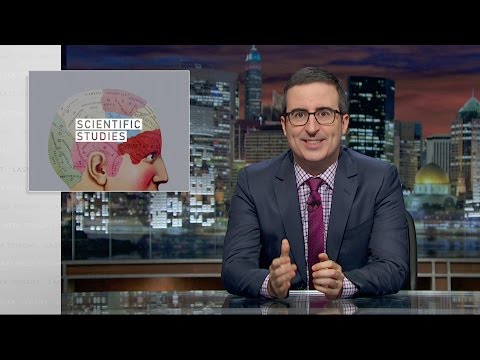
Scientific Studies: Last Week Tonight with John Oliver (HBO)
John Oliver's Last Week Tonight segment on how media outlets report incomplete or untrue findings as settled science.

Where Do Trees Get Their Mass?
Veritasium asks people where a tree's mass comes from, then explains that most of a dry tree's mass originates from carbon dioxide in the air.
Vaccines and Autism: A Measured Response
hbomberguy's long video dissects the anti-vaccine movement, analyzing Andrew Wakefield's fraudulent MMR-autism study, the media's role and Wakefield's loss of his license.