 PickVids
Best Scientific method & science communication Videos
The 127 Scientific method & science communication videos here were recommended by different people across different months. Choose by who it is for: 2 introductory, 12 intermediate, 113 for a general viewer, and 0 for someone who wants the harder derivation. Most of them are an explainer. What they share is that one picture or analogy is used to supply a missing concept. Channels you will keep seeing include Veritasium, Angela Collier , Christopher Sykes.
The Fermi Paradox — Where Are All The Aliens? (1/2)
Kurzgesagt introduces the Fermi paradox: with so many stars and planets, why do we see no sign of aliens?

Feynman: Magnets FUN TO IMAGINE 4 But see NEW UPDATED file at https://tinyurl.com/ycphc432
A clip from the BBC Fun to Imagine series in which Richard Feynman is asked how magnets work and explains why 'why' questions depend on a shared framework of understanding and cannot always be answered in layman's terms.

The Man Who Took LSD and Changed The World
Veritasium tells the story of Kary Mullis, the surfer and LSD user who invented PCR and won a Nobel Prize.
R. P. Feynman on the difference between knowing the name of something and knowing something.
A two-minute clip of Richard Feynman on the difference between knowing the name of something and actually knowing it.

Freeman Dyson: Heretical Thoughts About Science and Society
Freeman Dyson's 2005 Boston University talk on heretical views about science and society.

Tiny meteorites are everywhere. Here’s how to find them.
Verge Science's pilot of its Trial & Error series follows amateur scientist Jon Larsen on a hunt for micrometeorites.

Rupert Sheldrake - The Science Delusion BANNED TED TALK
A re-upload of Rupert Sheldrake's TEDx talk The Science Delusion, which TED removed from its channel.

My dream died, and now I'm here
Sabine Hossenfelder explains why she left academia, criticizing its incentives, funding and career structure.

Debunking Dr. Robert Lustig's Claims from The Huberman Lab Podcast | Educational Video | Biolayne
Dr.
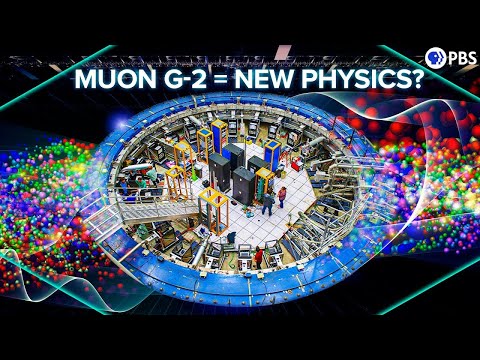
Why the Muon g-2 Results Are So Exciting!
A PBS Space Time episode explaining the Fermilab Muon g-2 results and why a discrepancy with the Standard Model prediction could point to new physics.

The Dolphin House
Atrocity Guide covers the 1965 dolphin experiments of Dr.

Richard Feynman on hungry philosophers (or do we see objects or only their light)
A one-minute clip from Richard Feynman's 1979 Auckland lecture in which he answers whether you see an object or only its light.

Is Our Food Becoming Less Nutritious?
Veritasium examines whether food has become less nutritious, weighing soil depletion, selective breeding and rising atmospheric CO2.

The man who faked human cloning
BobbyBroccoli's first of two long documentaries about Hwang Woo-suk, the South Korean scientist who faked human cloning results.

Feynman: Mathematicians versus Physicists
A ten-minute clip of Richard Feynman describing how mathematicians and physicists differ in their interests and customs.

Gell-Mann Amnesia and Michio Kaku
Physicist Angela Collier uses Gell-Mann amnesia to critique pop-science figures, especially Michio Kaku, and works through an eigenvalue problem along the way.
Neil Degrasse Tyson on being Black, and Women in Science
A short clip of Neil deGrasse Tyson answering a question about why there are not more women in science.

You Have No Idea How Wrong You Are
A talk given at the 2011 Nammour Symposium at Sacramento State arguing that past generations were wrong about nearly everything, so we should expect to be wrong too.
Feynman: Knowing versus Understanding
A short clip of Richard Feynman on the difference between merely knowing how to reason mathematically and understanding why physical theories work.

Feynman_i_dont_like_honors_ [longer_version]
A short excerpt from a BBC interview in which Richard Feynman explains why he dislikes honors and prizes, including his own Nobel, saying the real reward is the pleasure of finding things out.

I was asked to keep this confidential
Sabine Hossenfelder reads a confidential email and uses it to explain her worries about academia and incentives in theoretical physics research.

Intuition Pumps and Other Tools for Thinking | Daniel Dennett | Talks at Google
Philosopher Daniel Dennett visits Google to discuss his book Intuition Pumps and Other Tools for Thinking, describing thought experiments and thinking tools across psychology, biology, computer science and physics.

Correlation CAN Imply Causation! | Statistics Misconceptions
A four-minute minutephysics video arguing that causal models and causal networks let statistics infer causation from correlation.

How Kurzgesagt Cooks Propaganda For Billionaires
The Hated One argues that Kurzgesagt acts as a propaganda vehicle for its billionaire-linked sponsors, citing funding it received.