 PickVids
Best Neuroscience & the brain Videos
The 92 Neuroscience & the brain videos here were recommended by different people across different months. Choose by who it is for: 2 introductory, 13 intermediate, 77 for a general viewer, and 0 for someone who wants the harder derivation. Most of them are a talk. What they share is that one speaker finishes a claim, and the examples exist to hold that claim up. Channels you will keep seeing include Andrew Huberman, TED, Stanford.

Why hierarchy creates a destructive force within the human psyche (by dr. Robert Sapolsky)
A short clip of Robert Sapolsky on how social hierarchy generates chronic stress, drawing on baboon research.
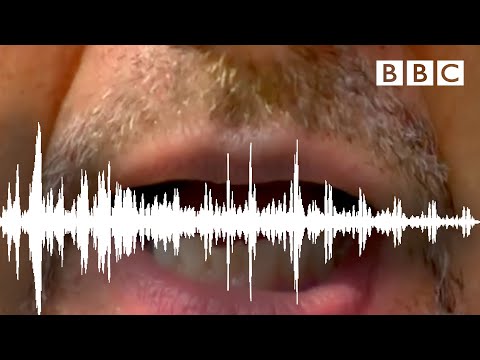
Try this bizarre audio illusion! 👁️👂😮 - BBC
A BBC Horizon clip demonstrating the McGurk effect, where the same audio sounds like different syllables depending on the mouth movements you see.

Update on my Brain Injury & the Future of Strange Parts
An update from the Strange Parts YouTuber on his recovery from a brain injury caused by a metal pipe while filming, and his plans for the channel.

Sebastian Seung: I am my connectome
Sebastian Seung's TED talk introduces the connectome, the map of neural connections he argues defines each person.

Neuroscience of Personality | Dario Nardi | Talks at Google
UCLA professor Dario Nardi presents brain-imaging research suggesting that different Myers-Briggs personality types use their brains in different ways.

Your Coffee Addiction Is Probably Good for You
CGP Grey's short explainer arguing that caffeine addiction is mostly harmless and may even be beneficial.

How Children Develop Perfect Pitch
Rick Beato discusses a theory of why some children develop perfect pitch, based on early exposure to music.

Your Brain at Work
David Rock gives a Google Tech Talk based on his book Your Brain at Work, using neuroscience to explain why focus and productivity are hard at the office.

Optimizing Workspace for Productivity, Focus, & Creativity
A Huberman Lab episode on setting up a workspace for productivity, focus and creativity, covering light, posture, movement and sound.
The most important lesson from 83,000 brain scans | Daniel Amen | TEDxOrangeCoast
Psychiatrist Daniel Amen discusses lessons from 83,000 brain scans, arguing that brain activity patterns relate to psychological symptoms and that you can improve your brain.

Is Your Red The Same as My Red?
Vsauce explores qualia and whether different people experience colors the same way.

altitude chamber hypoxia training guy passes out
Footage of FAA altitude chamber hypoxia training for pilots in which a participant passes out from oxygen deprivation.

Dr. Matthew Phillips - 'Metabolic Strategies as Therapies in Cancer and Neurodegeneration'
Neurologist Dr.
The Man With The Seven Second Memory
A documentary on Clive Wearing, a renowned musician whose brain was damaged by a virus in 1985, leaving him with a memory spanning only about seven seconds.
Your Brain Hallucinates Your Conscious Reality | Anil Seth | TED
Neuroscientist Anil Seth argues in this TED talk that perception is a controlled hallucination: the brain constantly predicts the world and our shared agreement is what we call reality.

Joe Rogan Experience #965 - Robert Sapolsky
Joe Rogan interviews Stanford neuroendocrinologist Robert Sapolsky about his book Behave.

Neurosurgeon pioneers Alzheimer's, addiction treatments using ultrasound | 60 Minutes
A 60 Minutes report on neurosurgeon Ali Rezai using focused ultrasound on the brain to treat Alzheimer's and addiction.

Understanding & Treating Addiction | Dr. Anna Lembke
Andrew Huberman interviews Stanford addiction psychiatrist Dr.

Q&A with a person who does not have an internal monologue
A student interviews Kirsten Carlson, who does not have an internal monologue, and she answers questions about how she thinks.
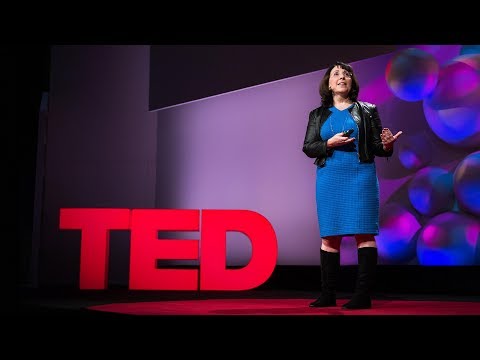
You aren't at the mercy of your emotions -- your brain creates them | Lisa Feldman Barrett
Psychology professor Lisa Feldman Barrett presents her research on what emotions are, arguing that the brain constructs them rather than reading them off faces.

McGurk effect - Auditory Illusion - BBC Horizon Clip
A two-minute BBC Horizon clip demonstrating the McGurk effect, where what you see of a speaker's mouth changes the sound you hear.

Building Brains to Understand the World's Data
Jeff Hawkins presents his view that the neocortex works on principles different from traditional computers.

14. Limbic System
Robert Sapolsky's Stanford lecture on the limbic system as the emotional part of the nervous system, covering its role in decision making, links to the cortex and the functions of its subparts.

WHY Exercise is so Underrated (Brain Power & Movement Link)
A video arguing that exercise matters for the brain as much as the body, linking movement, the nervous system and BDNF to learning and memory.